How to Identify Your Skin Type: A Simple Guide(2026)
Introduction
Have you ever bought a skincare product because, it worked beautifully for someone only to find that it did not suit your skin? The problem may not be the skincare product itself. You may simply have a skin type.
Knowing your skin type is one of the ways to build a skincare routine that, actually works for your skin type. It can help you choose the cleanser, moisturizer, sunscreen and other skincare products without constantly guessing.
This guide is going to help you figure out How to Identify Your Skin Type: A Simple Guide. You will see what signs to look for with your skin. Then you will learn how to pick the skincare products for your skin type needs. You want to choose skincare products that’re good for your skin type.

Why Is It Important to Know Your Skin Type?
Your skin has its way of behaving. Some people naturally produce oil while others struggle with dryness or sensitivity.
When you know that How to Identify Your Skin Type: A Simple Guide what skincare products to use. For example people with skin type may like a lightweight moisturizer. On the hand people with dry skin type need a richer moisturizer. People with skin type also need to use skincare products that are gentle, on their sensitive skin type.
Knowing your skin type does not mean you have to follow skincare rules. It simply gives you a starting point.
What Are the Main Skin Types?
There are five recognized skin types:
* Oily skin type
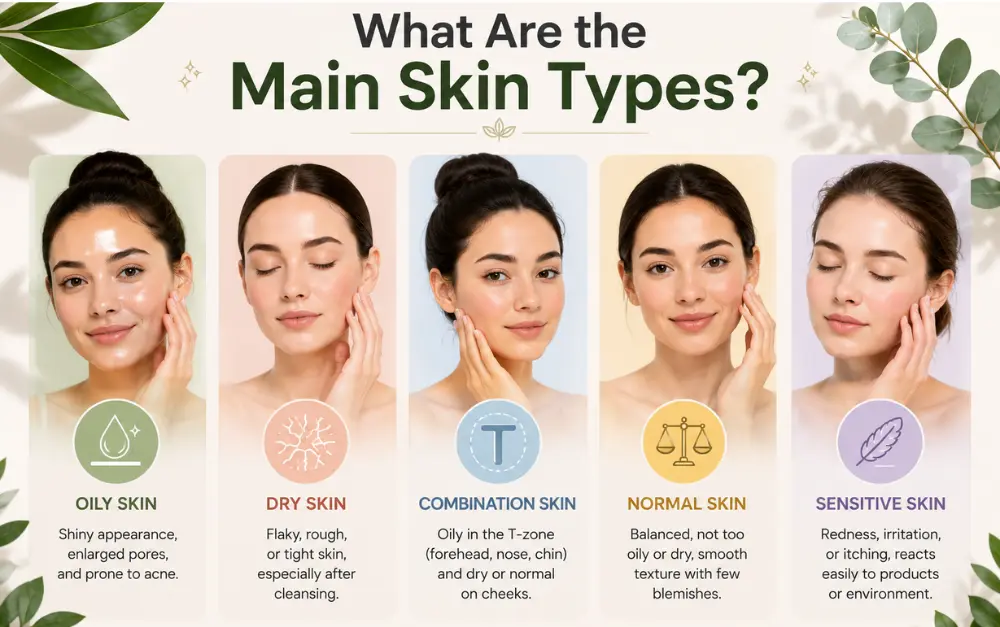
* Dry skin type
* Combination skin type
* skin type
* Sensitive skin type
Lets look at the signs of each skin type.
1. Oily Skin
Oily skin type produces more sebum than your skin type needs.
You may notice How to Identify Your Skin Type: A Simple Guide that your face becomes shiny during the day around the forehead, nose and chin. Your pores may also appear noticeable and you may be more likely to experience clogged pores or breakouts.
Common signs of skin type include:
* Noticeable shine
* Larger-looking pores
* Frequent clogged pores
* Greasy feeling later in the day
If your skin type is oily avoid assuming that you do not need moisturizer. Oily skin type can still become dehydrated.
2. Dry Skin Type
Dry skin type generally produces natural oil.
Your face may feel tight after washing especially if you use a cleanser. You might also notice texture, flaking or areas that, feel uncomfortable.
Common signs of skin type include:
* Tightness
* Rough or flaky texture
* Visible oil
* Skin that, feels uncomfortable after cleansing
A gentle cleanser and a nourishing moisturizer can be helpful for a dry skin type routine.
3. Combination Skin Type
Combination skin type has characteristics of than one skin type.
Usually the T-zone, which includes the forehead, nose and chin produces oil while the cheeks may feel normal or dry.
Common signs of combination skin type include:
* An oily. Nose
* Drier cheeks
* Different textures in areas
* Pores that are more noticeable around the T-zone
Combination skin type can be tricky because, one skincare product may work well on one part of your face but, feel too heavy or too drying on another.
4. Normal Skin Type
Normal skin type is generally well balanced.
It is not excessively oily or dry. The skin usually feels comfortable throughout the day.
Common signs of skin type include:
* Balanced oil production
* Relatively smooth texture
* Few areas of dryness
* Few areas of oiliness
Even if you have normal skin type, daily cleansing, moisturizing and sun protection are still important.
5. Sensitive Skin Type
If you have skin it gets upset easily. This means your skin can react to the skincare products you use or things around you.
Your skin might turn red. It can sting or burn or itch or feel uncomfortable after you use these products. This happens because sensitive skin type is more likely to react to these things. Sensitive skin type is like that it reacts easily to skincare products or things in the environment, around you.
Common signs of skin type include:
* Redness
*. Stinging
* Easy irritation
* Reactions to harsh skincare products
If your skin type frequently reacts to skincare products or you get reactions that do not go away but think How to Identify Your Skin Type: A Simple Guide. you should talk to a dermatologist who knows what they are doing. They can give you the help you need with your skincare products and skin type.
How to Identify Your Skin Type: A Simple Guide at Home
You do not need equipment to get a basic idea of your skin type. Try How to Identify Your Skin Type: A Simple Guide.
Step 1: Wash Your Face
Clean your face with a cleanser and rinse with lukewarm water.
Pat your skin dry than rubbing it.
Step 2: Do Not Apply Skincare Immediately
After cleansing leave your skin type alone for a period.
Do not immediately apply moisturizer, serum, sunscreen or makeup. This allows you to observe How to Identify Your Skin Type: A Simple Guide.
Step 3: Observe How Your Skin Feels
Pay attention to your face.
Does it feel tight or uncomfortable? Your skin type may lean dry.
Does it become shiny over? You may have skin type.
Is your T-zone shiny while your cheeks feel dry or comfortable? Combination skin type may be more likely.
Does your skin feel comfortable without dryness or excess oil? You may have skin type How to Identify Your Skin Type: A Simple Guide.
Step 4: Look at Your Skin During the Day
Your skin type can behave differently as the day goes on.
Check your face a hours after cleansing. Look for changes in shine, dryness, redness or discomfort.
This can give you an idea than judging your skin type immediately after washing.
Can You Use a Blotting Paper Test?
Yes. A blotting paper test can give you another clue about how oil your skin type produces.
Gently press blotting paper against areas such as your forehead, nose, cheeks and chin.
If you see a lot of oil across areas your skin type may be oily.
If oil is mostly visible around your T-zone while your cheeks have oil you may have combination skin type.
If there is little oil your skin type may be dry or normal. However this test alone cannot determine your skin type.
Skin Type vs. Skin Concerns
It is important not to confuse skin type with skin concerns.
Your skin type might be oily while your concerns could include acne or enlarged pores.
You might have skin type and also be concerned about uneven skin tone.
Some common skin concerns include:
* Acne
* Blackheads
* Dark spots
* Uneven skin tone
* Fine lines
* skin
* Redness
Understanding this difference can make your skincare routine much easier to plan How to Identify Your Skin Type: A Simple Guide.
Can Your Skin Type Change?
Yes your skin type behavior can change over time.
Age, weather, hormones, environment, stress and the skincare products you use can all affect how your skin feels and behaves.
For example your skin type may feel drier during months and become oilier during hot weather.
That is why it is useful to pay attention to your skin type of assuming that your skin type will always stay exactly the same.
How to Choose Skincare for Your Skin Type
Once you know your skin type choosing skincare products becomes easier.
For Oily Skin Type
Look for non-comedogenic skincare products and avoid using harsh skincare products simply to remove oil.
For Dry Skin Type
Focus on cleansing and moisturizing skincare products that help keep your skin type comfortable and hydrated.
For Combination Skin Type
You may need to adjust skincare products depending on the area of your face. Lightweight hydration can work well while drier areas may need moisture.
For Normal Skin Type
Keep your simple. A gentle cleanser, moisturizer and sunscreen can provide a foundation.
For Sensitive Skin Type
Choose and introduce new skincare products at a time. If it causes irritation stop using it and consider getting professional advice.
When Should You See a Dermatologist?
At home skin-type test can help you understand your skin type. It is not a medical diagnosis.
Consider seeing a dermatologist if you have acne, severe irritation, unexplained redness, painful skin conditions or reactions that, do not improve.
A dermatologist can examine your skin type. Recommend appropriate treatment and skincare.
Frequently Asked Questions
How can I identify my skin type at home?
Start by washing your face with a cleanser and leaving your skin type without skincare for a short period. Observe whether your skin type becomes oily, dry, tight, comfortable or oily in the T-zone.
What is the easiest way to identify skin type?
Look for shine across your face especially a few hours after cleansing. Enlarged-looking pores and frequent clogged pores can also be signs of skin type.
How do I know if I have combination skin type?
If your forehead, nose and chin become oily while your cheeks remain dry or normal you may have combination skin type.
Can dry skin type also be acne-prone?
Yes. Having skin type does not automatically mean you cannot experience breakouts. Skin type and skin concerns are things.
How often should I check my skin type?
You do not need to test your skin type. Pay attention to changes when the weather, your routine or your skin type behavior changes.
Final Thoughts
Learning how to identify your skin type is a useful first step toward better skincare.
Of buying skincare products based only on trends or recommendations from other people start by understanding what your own skin type needs.
Observe your skin type after cleansing look for patterns and keep your simple. Remember that your skin type can change with the seasons and over time so do not worry if it does not fit perfectly into one category.
Once you know your skin type you will have a clearer starting point, for creating a skincare routine that works for your skin type.